
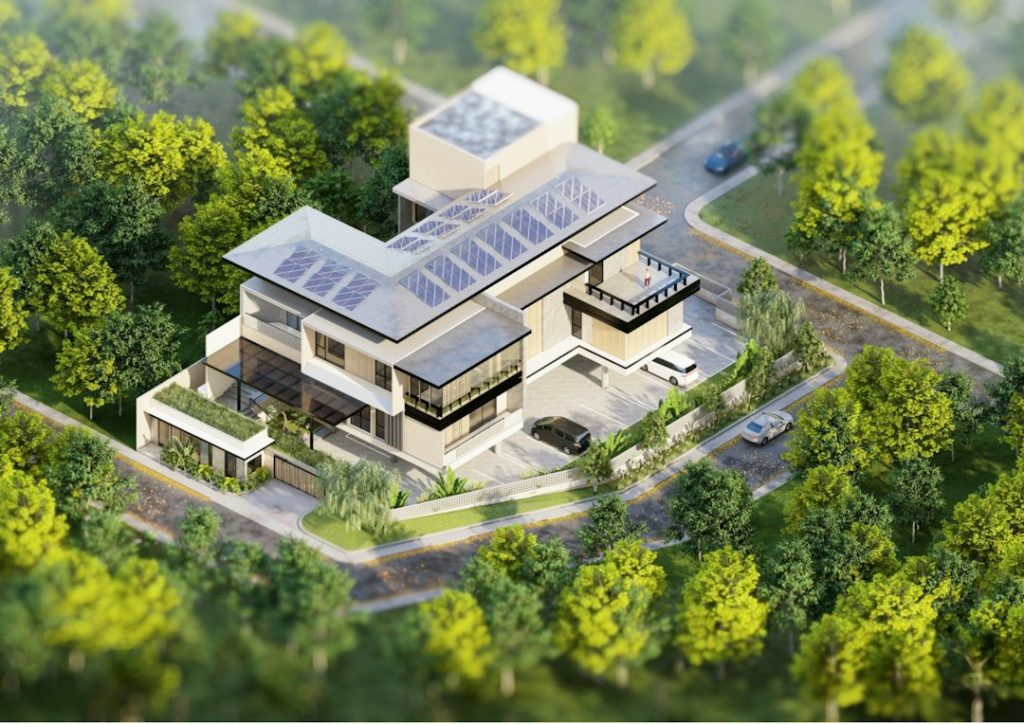
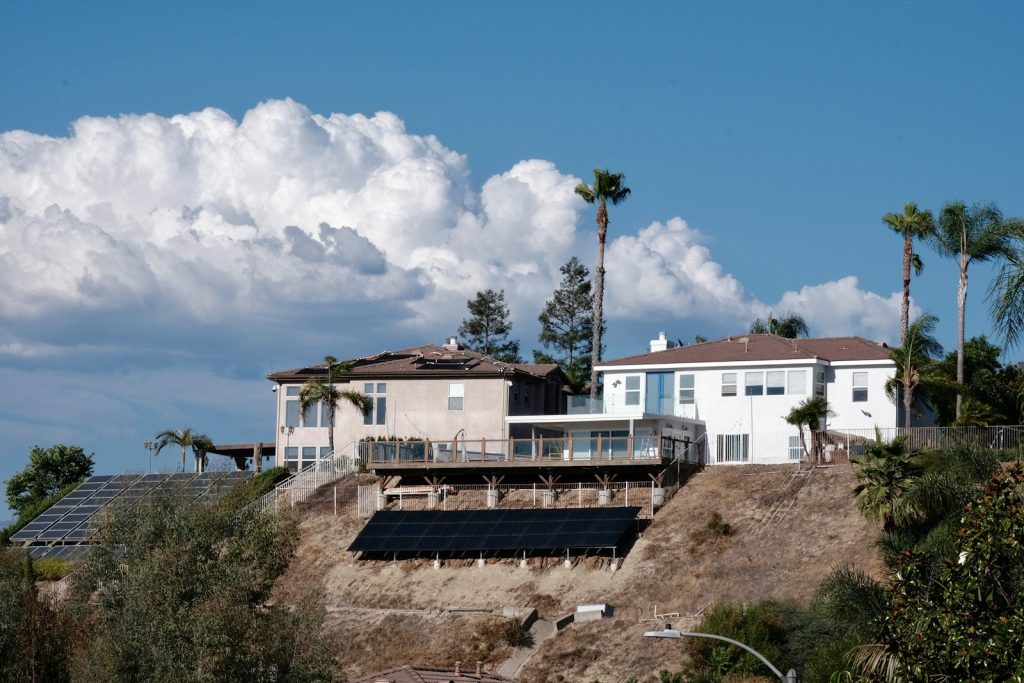

A well-designed photovoltaic system is more than panels on a roof. For a villa on the Costa del Sol, long-term performance depends on the relationship between solar generation, the inverter, household demand, optional battery storage and the electrical infrastructure already serving the property.
Begin with your property’s energy profile
We start by understanding how the villa consumes electricity, not by guessing a panel count. Seasonal occupation, air-conditioning, heat pumps, pool filtration, electric-vehicle charging, available roof area and shading all influence the right technical approach.
- Review of electricity bills, seasonal loads and daytime consumption.
- Site review covering roof orientation, inclination, materials, access and shading.
- Consideration of PV layout, inverter topology and DC/AC protective infrastructure.
- Assessment of battery capacity, charge/discharge power and intended backup requirements.
- Interfaces with distribution boards, metering and monitoring systems.
- Planning for commissioning, owner handover, maintenance access and documentation.
Photovoltaic panels and inverter selection
Panel peak wattage alone does not establish real output. Temperature, weather, cable losses, array orientation and shaded strings affect production. Inverter selection must take account of electrical compatibility, permissible string voltages, export or self-consumption arrangements and whether storage may be added later.
Battery storage: what it can and cannot do
Storage can shift some excess daytime generation into the evening, but financial outcomes depend on the real consumption pattern, tariffs, equipment cost and operating strategy. Backup power is a separate technical requirement: not every battery or hybrid inverter can safely supply the property during an outage, and critical-load distribution may be necessary. We define the intended operating modes before selecting equipment.
Solar energy and KNX-based smart living
Where supported by the chosen equipment, energy monitoring can inform the scheduling of selected loads such as hot-water production, climate conditioning, pool systems and EV charging. We evaluate compatibility, local-control capability and serviceability rather than promising that every product communicates with every home-automation platform.
Spanish regulations and project-specific approval
Residential self-consumption is governed by Spanish national rules including Real Decreto 244/2019, as amended, together with applicable electrical safety, grid-connection and local permitting requirements. Documentation and sign-off by authorised professionals may be required. No universal savings figure, subsidy eligibility or payback period can be guaranteed without studying the actual installation.
Official regulatory reference: BOE – Real Decreto 244/2019 (consolidated).
Discuss a solar project
Tell us the property’s location, annual electricity consumption, roof type and whether battery backup is a priority. We can then establish what site information is needed before designing a suitable solution.
Talk to Peyman: +34 625 629 326 · Send an enquiry · Svenska.