
Solar photovoltaic systems can make a substantial contribution to how a Costa del Sol villa uses electricity. A successful installation, however, is an engineering project rather than simply a collection of panels on the roof. System sizing, roof conditions, safety, load patterns, battery compatibility and Spanish administrative requirements all matter.

Solar planned around your actual villa
Our starting point is not a generic number of panels. We consider annual and hourly electricity consumption, summer cooling, pool pumps, hot-water demand, home occupancy patterns, electric-vehicle charging and plans for future equipment. A holiday home with occasional occupancy may benefit from a different design from a permanently occupied residence.
- Review of energy bills, consumption profile and electrical capacity.
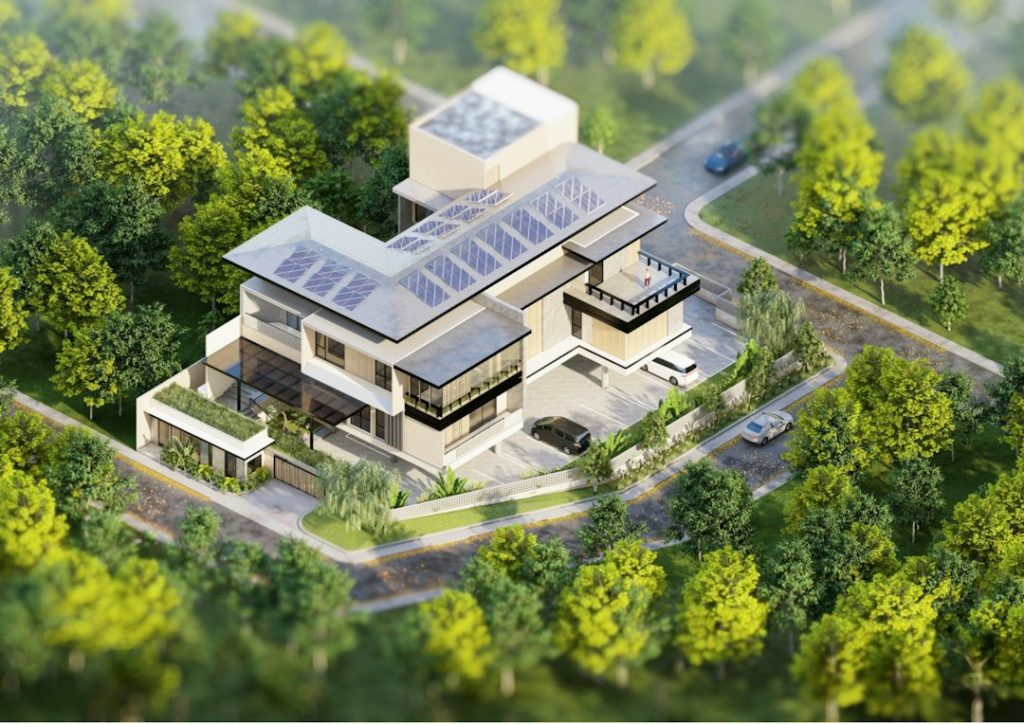
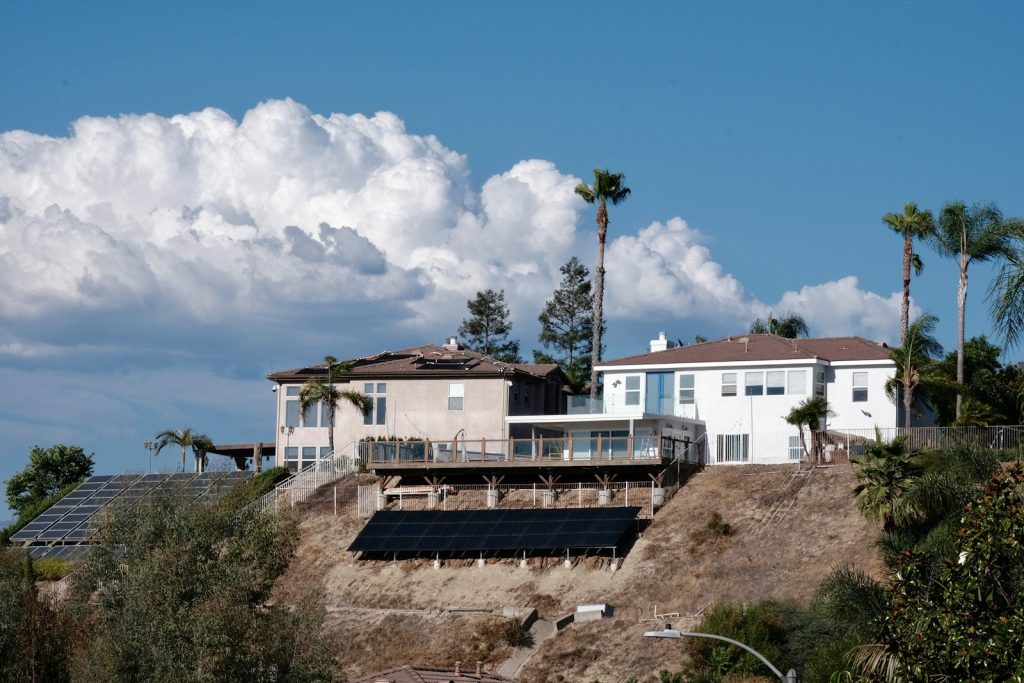
- Roof assessment: useful area, orientation, shading, mounting conditions and maintenance access.
- PV array and inverter sizing for the project, with suitable protective and monitoring provisions.
- Battery-storage assessment and compatibility review when requested.
- Options for future EV charging, load management and home-automation integration.
Panels, inverters and storage – how the system works
Photovoltaic modules produce direct current. An inverter converts that energy for use with the building electrical installation, while metering and monitoring help show generation and consumption. A suitable battery may shift some self-generated energy into the evening, but battery storage does not automatically provide backup power during a grid outage. Backup capability requires specifically engineered equipment, isolation and configuration.
Energy management and KNX smart-home integration
Where the installed equipment supports it, solar production and consumption can be coordinated with building automation. For example, a well-designed system may schedule compatible loads around generation peaks or expose monitoring in a central control interface. KNX and compatible gateways can help create a coherent solution; Zigbee can complement individual functions where appropriate. Reliability and electrical safety take priority over novelty.
Safe installation and Spanish legalisation
In Spain, photovoltaic self-consumption installations may require project-specific technical documentation, electrical compliance work and administrative procedures. The relevant municipality, grid connection, installation capacity and chosen self-consumption arrangement may all affect the process. The latest requirements must be checked for the particular site by the appropriate qualified specialists before commissioning.
For independent official guidance, consult Spain’s IDAE Self-Consumption Office. We do not promise fixed savings, grants or payback times without a property-specific assessment.
A coordinated six-stage process
- 1. Discovery: your villa, existing supply, objectives and usage.
- 2. Assessment: roof and shading, electricity demand and suitable system configurations.
- 3. Engineering: module layout, inverter, metering, protection and optional storage.
- 4. Installation planning: access, cable routes, waterproofing, safety and coordination with other work.
- 5. Installation, inspection and commissioning as required for the project.
- 6. Handover: system overview, monitoring guidance, documentation and maintenance considerations.
Frequently asked solar questions
How many panels does a villa need? That depends on consumption and usable roof area, not floor area alone.
Is a battery necessary? Not always. Storage should be assessed against demand timing, electricity tariff and desired functionality.
Will my home have power during an outage? Only where backup operation is separately designed and installed for that purpose.
Can solar work with KNX? Potentially, with the right compatible inverter, meter or gateway; integration must be verified against the selected devices.
Let us discuss your property
Tell us your villa location, approximate size, electricity consumption, roof layout and whether you have a pool, EV charger or interest in storage. We can discuss the right next technical steps for a considered solar project.
Contact Peyman: +34 625 629 326 · WhatsApp · Contact. Related: electrical engineering and smart-home integration. Läs på svenska →